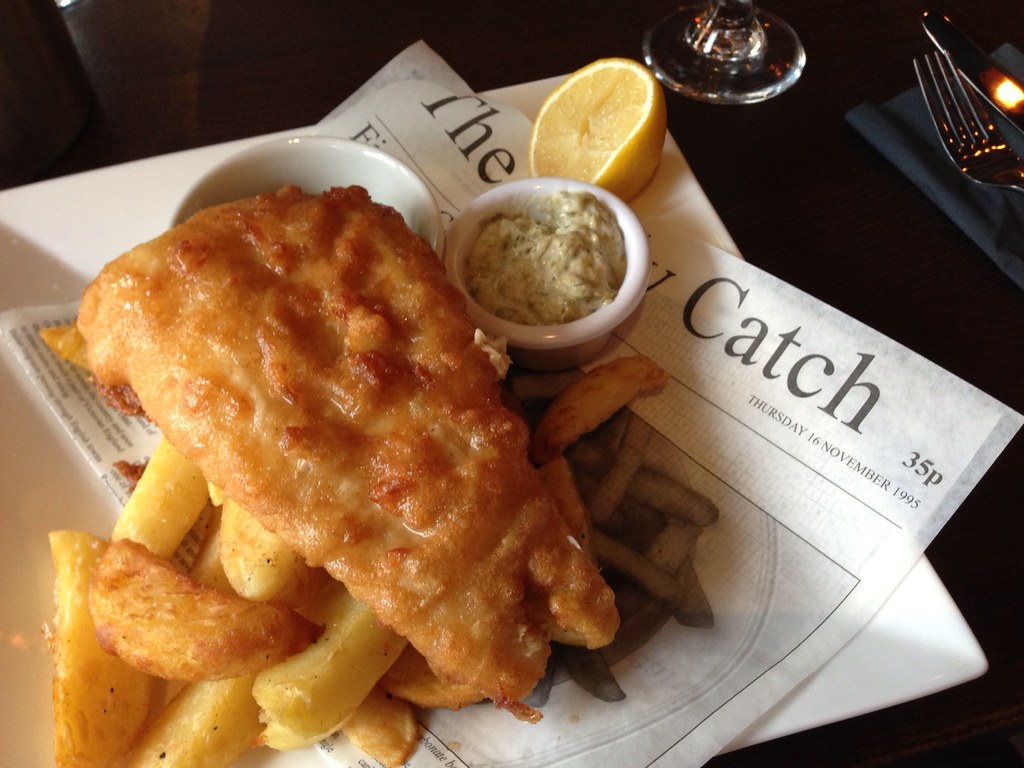
Few dishes say “Britain” quite like fish and chips: crisp battered cod or haddock, a heap of thick-cut chips, salt, malt vinegar and perhaps a side of mushy peas. Yet the nation’s favourite takeaway is younger than many people think, and its two halves began life quite separately.
Fried fish: a Sephardi Jewish tradition
The fish half of the story begins with Sephardi Jews whose families had left Spain and Portugal in the 16th and 17th centuries. Frying fish in a coating of flour or batter was a practical way to prepare food in advance for the Sabbath, when cooking was not permitted, because the fish could be eaten cold the following day.
Jewish communities brought the practice with them to London, and fried fish became a familiar street food in the capital. By 1838 Charles Dickens could mention a “fried fish warehouse” in Oliver Twist without needing to explain what it was.
Chips: a cheap and filling snack
Chipped, fried potatoes have a murkier history. By the middle of the 19th century, fried pieces of potato were being sold in the industrial towns of northern England as a cheap, hot and filling snack for mill workers. Whether the idea arrived from France or Belgium or simply developed locally is still debated.
The first chip shops
Who first put fish and chips together is one of the great arguments of British food history. One claim belongs to Joseph Malin, a young Jewish immigrant who is said to have opened a fish and chip shop in London’s East End around 1860. Another points to John Lees, who sold fish and chips from a wooden hut at Mossley market, near Oldham in Lancashire, in about 1863.
Neither claim can be proved beyond doubt, and the most likely answer is that the combination appeared in several places at roughly the same time. What is clear is that by the 1870s the pairing was spreading fast.
Trawlers, trains and the boom years
Fish and chips became a national habit thanks to the Victorian transport revolution. Steam trawlers could land huge catches from the North Sea, and the railways carried the fish inland packed in ice, so that fresh fish reached industrial towns far from the coast at a price working families could afford.
By the early 20th century there were tens of thousands of fish and chip shops across Britain. During the Second World War, fish and chips were never placed on the ration, and the government regarded chip shops as an important way of keeping workers fed and spirits up.
Newspaper, vinegar and mushy peas
For generations, fish and chips came wrapped in old newspaper, which kept them warm and cost the shop almost nothing. The custom faded from the 1980s amid concerns about printing ink touching food, and today most shops use plain paper or cardboard.
Regional habits still vary from town to town:
- Mushy peas and “scraps” (loose bits of crispy batter) are classic accompaniments in the north of England
- Curry sauce and gravy are popular in many parts of the country
- In Edinburgh, chips are traditionally served with “salt and sauce”, a tangy brown sauce thinned with vinegar
- In Scotland, a portion of fish and chips is often called a “fish supper”
Key points
- Fried fish was introduced to Britain by Sephardi Jewish immigrants
- Chips were sold as a cheap snack in northern industrial towns by the mid-19th century
- London and Lancashire both claim the first fish and chip shop, in the early 1860s
- Steam trawlers and railways turned fish and chips into an affordable national dish
- Fish and chips were never rationed during the Second World War
Next time you queue at the chippy, remember that you are taking part in a tradition shaped by refugees, mill workers, fishermen and railway engineers.