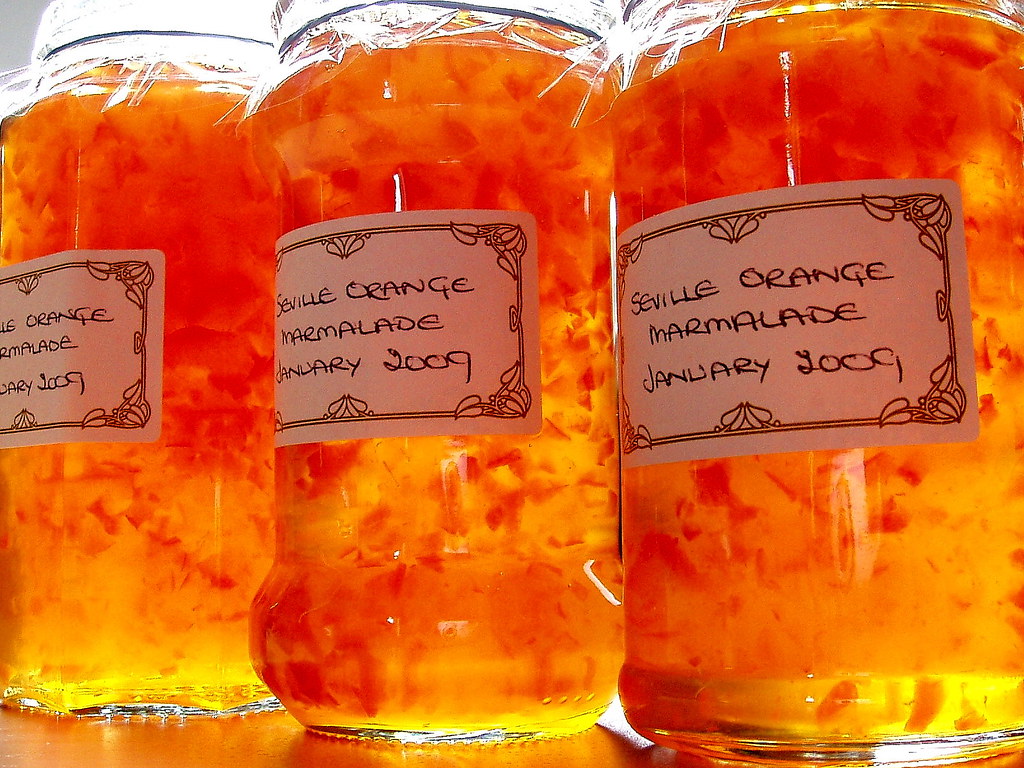
A jar of thick-cut orange marmalade, a rack of toast and a pot of tea: few things are more British. Yet the name of this most British of preserves comes from Portugal, and its key ingredient is grown in Spain.
A word from Portugal
“Marmalade” comes from the Portuguese marmelada, a firm paste made from quinces (marmelo). In Tudor times, quince paste and other fruit pastes were imported into England in boxes and eaten as a luxurious sweetmeat, usually at the end of a meal rather than at breakfast.
Early English recipes for “marmalade” used quinces, plums and other fruit as well as oranges. Over time, the word came to mean preserves made from citrus fruit, and today UK regulations reserve the name “marmalade” for citrus preserves.
Seville oranges
Classic British marmalade is made with bitter Seville oranges, which are far too sour to eat raw but full of flavour and natural pectin. Their short season, usually January and February, is why winter is still “marmalade season” for home cooks.
The Dundee legend
The most famous marmalade story is set in Dundee. In the 18th century, so the legend goes, a grocer named James Keiller bought a cheap cargo of Seville oranges from a storm-damaged Spanish ship, and his mother Janet turned them into marmalade.
It is a charming tale, but recipes for orange marmalade existed long before. What the Keiller family did do was build a successful commercial business, founded in 1797, and they are credited with popularising a chunky Dundee style with shredded peel.
From dessert to breakfast
During the 19th century, marmalade moved from the dessert course to the breakfast table, spread on toast. Frank Cooper’s Oxford Marmalade, first made from a family recipe in 1874, became a famous brand, and marmalade travelled with British soldiers, sailors and explorers around the world. Captain Scott is said to have taken Oxford marmalade on his expedition to Antarctica.
Paddington Bear
In 1958, Michael Bond introduced Paddington Bear, who arrives from “darkest Peru” with a fondness for marmalade sandwiches and keeps one under his hat for emergencies. Paddington has done as much as anyone to keep marmalade in the public eye.
Marmalade today
Marmalade sales have fallen as breakfast habits change, but enthusiasm for homemade marmalade remains strong. Since 2005, Dalemain in Cumbria has hosted the World’s Original Marmalade Awards, attracting entries from home cooks around the world.
Key points
- The word comes from the Portuguese marmelada, a quince paste
- Bitter Seville oranges, in season in January and February, are the classic choice
- The Dundee shipwreck story is a legend, but the Keillers built a famous business from 1797
- Marmalade moved from dessert to the breakfast table in the 19th century
- Paddington Bear made the marmalade sandwich famous