Baked beans, tinned tomatoes, corned beef, a tin of soup on a cold day. Canned food is so ordinary that it is easy to forget that it was once a cutting-edge technology, developed to feed armies and navies at the start of the 19th century.
A prize for preserving food
During the Napoleonic Wars, the French government offered a reward for a better way of preserving food for its armies. A Paris confectioner, Nicolas Appert, found that food sealed in glass bottles and then heated would keep for months. He published his method in 1810 and received the prize.
The British patent
In the same year, 1810, a merchant named Peter Durand was granted a British patent for preserving food in containers, including canisters made of tin-coated iron. The patent was bought by the engineer Bryan Donkin, who, with his partners John Hall and John Gamble, set up a canning works in Bermondsey, south London, in the early 1810s.
Their tinned meat, soups and vegetables were supplied to the Royal Navy and to expeditions travelling to the polar regions, where fresh food was impossible to obtain.
Hammer and chisel
Early cans were made by hand and were thick and heavy. They had to be opened with a hammer and chisel, a knife or even a bayonet. Dedicated can openers did not appear until the 1850s, more than forty years after the first cans.
Tinned food was not always safe. When Sir John Franklin’s expedition vanished in the Arctic in the 1840s, it was carrying thousands of tins. Poor lead solder in the cans has been suggested as one factor in the crew’s illness, although historians still debate how important it was.
From the navy to the pantry
As machinery improved in the second half of the 19th century, tins became cheaper and canned food reached ordinary shops. Imported tinned meat from Australia and South America, salmon and fruit gave families affordable new foods.
Both World Wars made canned food more important than ever, because it could be stored and transported easily. Corned beef and tinned fish helped feed soldiers and civilians alike.
Beans on toast
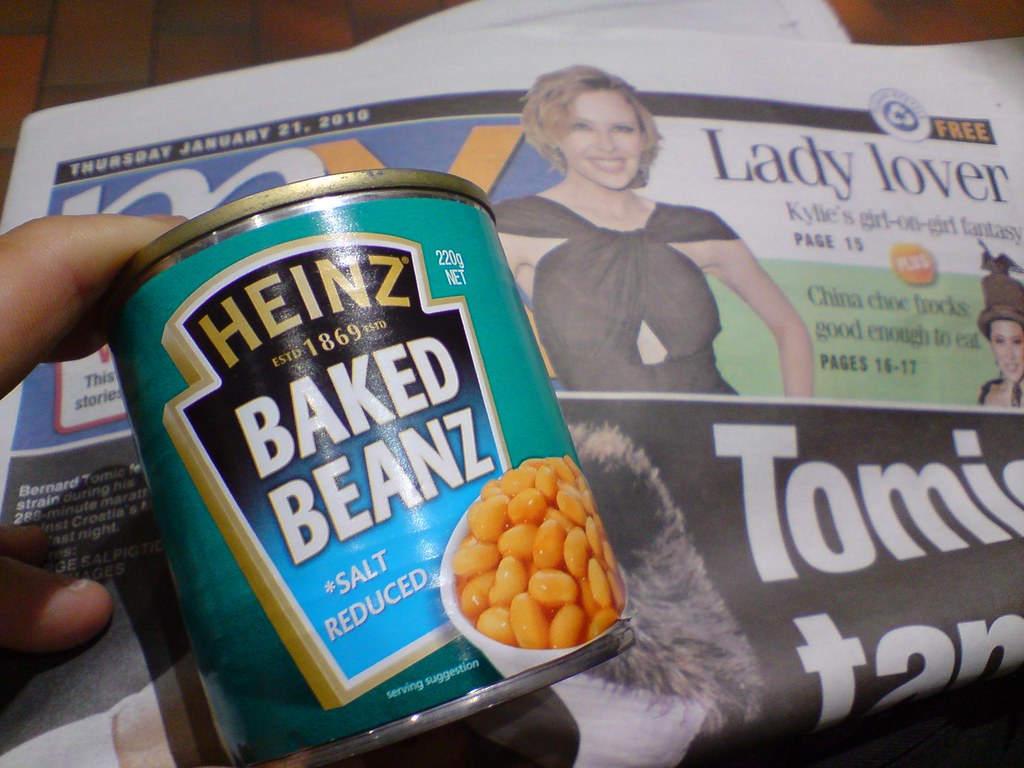
Heinz baked beans were first sold in Britain in 1886, as an expensive imported delicacy at Fortnum & Mason. Production began in Britain in the late 1920s, and the beans quickly became an everyday food. Beans on toast became a cheap, quick and comforting meal, and in 1967 the slogan “Beanz Meanz Heinz” made the brand a household name.
Key points
- Nicolas Appert developed food preservation by heating sealed containers in France in 1810
- Peter Durand’s British patent of the same year covered tin-coated iron cans
- Bryan Donkin’s Bermondsey works supplied tinned food to the Royal Navy
- Can openers were invented decades after the first cans
- Heinz baked beans arrived in Britain in 1886 and were made in Britain from the late 1920s