Britain is a nation of pie lovers. From the pork pie on a picnic blanket to the pasty eaten on a Cornish harbour wall, pastry wrapped around a savoury filling is one of the oldest and most enduring ideas in British cooking.
The pastry coffin
In medieval England, pies were often baked in a thick, hard crust known as a “coffin”, from an old word meaning a box or basket. The pastry was a container rather than a treat. It held the filling together during long cooking, kept it moist and protected it during storage and travel. Often the crust itself was not eaten at all.
Pies were a way of cooking and preserving meat, game and fish, and great households served elaborate pies at feasts. Some contained surprises, a custom remembered in the nursery rhyme about four-and-twenty blackbirds baked in a pie.
Hot water crust and the pork pie
Hot water crust pastry is made by mixing flour with hot water and melted lard. It is strong enough to be shaped by hand or around a mould, which made it perfect for raised pies that stand up on their own.
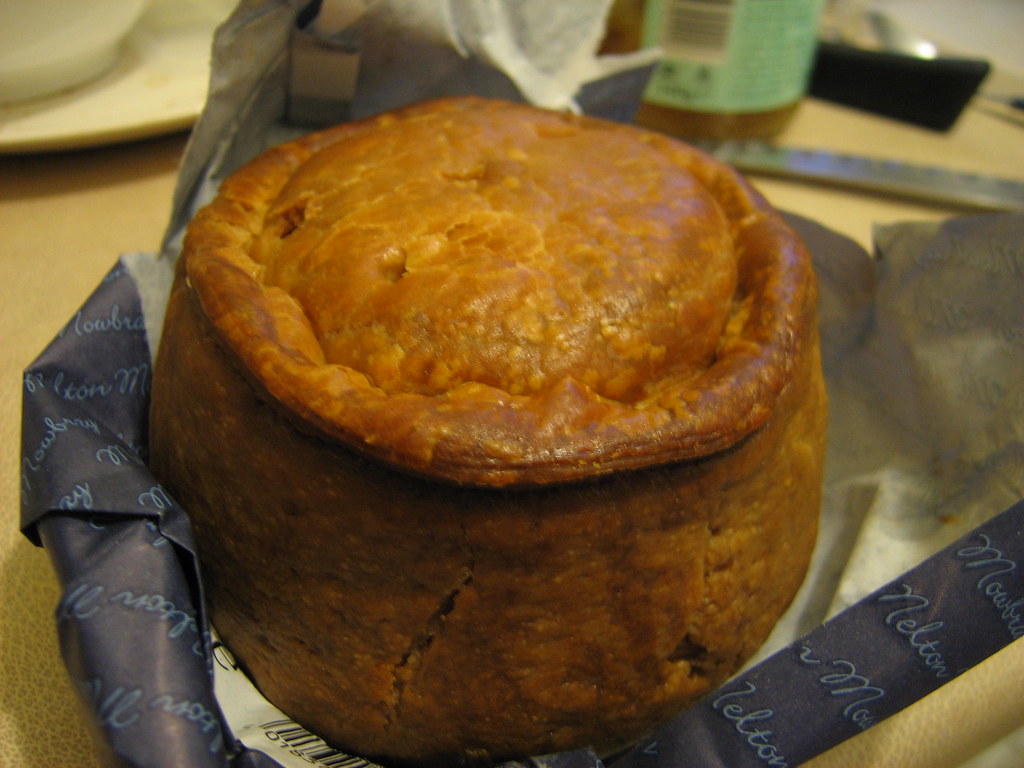
The most famous raised pie is the Melton Mowbray pork pie, associated with the hunting country of Leicestershire in the 18th and 19th centuries. It is made with uncured pork, which turns grey rather than pink when cooked, and it has bowed sides because it is baked without a supporting tin. In 2008 it was granted Protected Geographical Indication status, so only pies made in a defined area around Melton Mowbray can use the name.
The Cornish pasty
The Cornish pasty is a semicircle of pastry filled with beef, potato, swede and onion, crimped along one side. It is closely linked with Cornwall’s tin and copper miners, who could carry a pasty underground as a complete meal.
A popular story says that the thick crimped edge served as a handle, held by dirty hands and then thrown away. It is a nice idea, but many Cornish families say they ate the whole pasty. Since 2011, the Cornish pasty has had Protected Geographical Indication status: a genuine Cornish pasty must be made in Cornwall.
Pies of every kind
Almost every part of Britain has its own pie tradition:
| Pie | Where | What makes it special |
|---|---|---|
| Pie and mash | London’s East End | Minced beef pie with mashed potato and green parsley “liquor” |
| Scotch pie | Scotland | Small, round mutton or beef pie, popular at football matches |
| Forfar bridie | Angus, Scotland | Horseshoe-shaped pastry filled with minced steak |
| Stargazy pie | Cornwall | Pilchards baked with their heads poking through the crust |
| Steak and kidney pudding | Across Britain | Meat filling steamed in suet pastry |
Stargazy pie is traditionally eaten in the village of Mousehole on 23 December, Tom Bawcock’s Eve, to celebrate a legendary fisherman who saved the village from famine.
Key points
- Medieval pies were baked in thick pastry “coffins” that worked as containers
- Hot water crust pastry made free-standing raised pies possible
- The Melton Mowbray pork pie has had protected status since 2008
- The Cornish pasty, linked with the county’s miners, has been protected since 2011
- Regional pies range from pie and mash in London to stargazy pie in Cornwall